
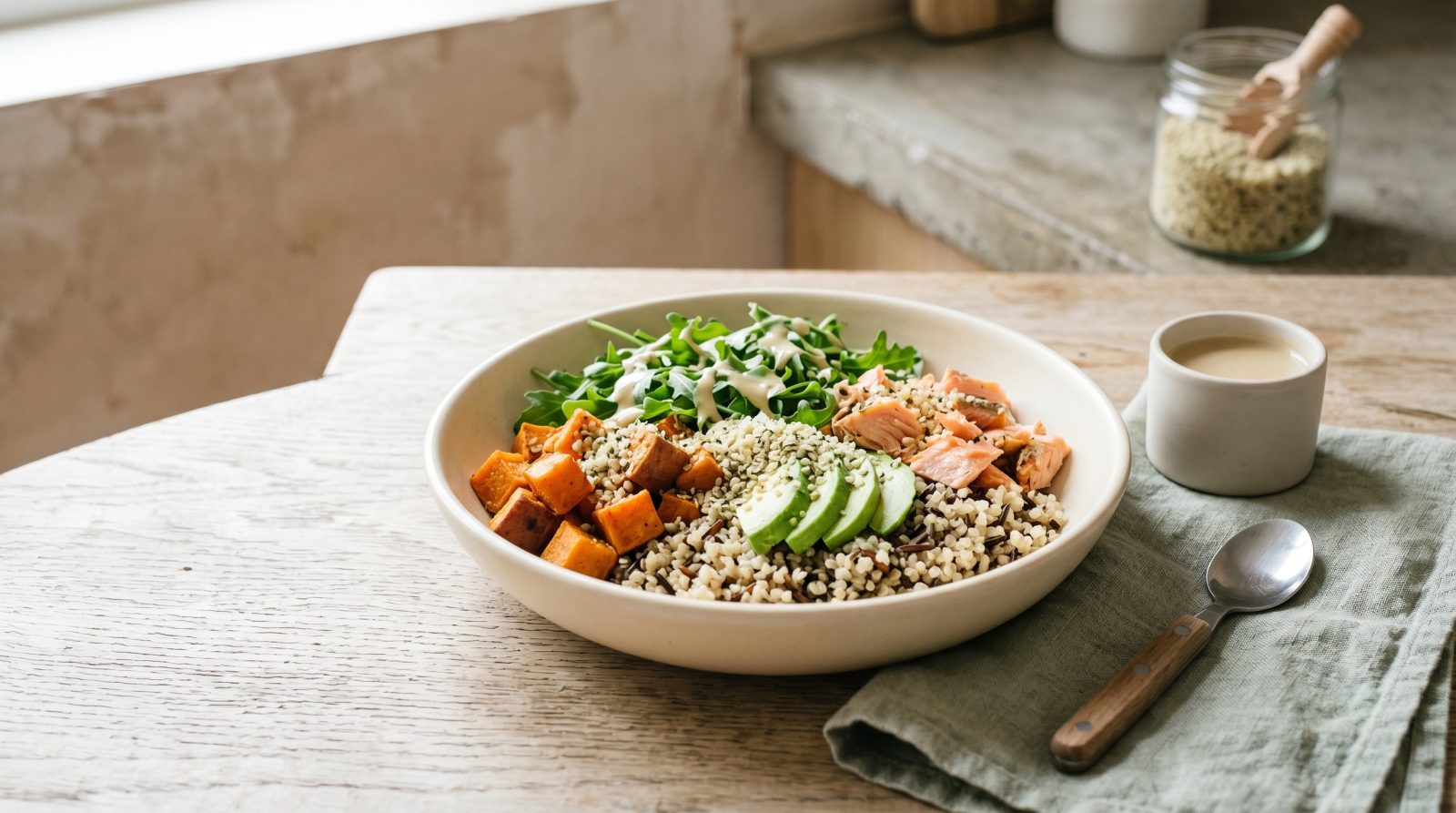
Hemp foods align with several established dietary patterns associated with cardiovascular health: high in polyunsaturated fats, low in saturated fats, providing plant protein, and contributing balanced omega ratios. Hemp is not a treatment for cardiovascular disease but fits cleanly into heart-healthy eating patterns.
What cardiovascular research supports
Decades of cardiovascular nutrition research have established dietary patterns associated with reduced cardiovascular disease risk. The strongest evidence supports:
- Replacing saturated fat with polyunsaturated and monounsaturated fat
- Regular omega-3 fatty acid consumption
- Reducing trans fat to as close to zero as possible
- Adequate fibre intake
- Plant-rich dietary patterns (Mediterranean, DASH, plant-based)
- Limited sodium intake
Hemp foods align with all six in relevant ways.
Hemp's contributions
| Hemp product (30g) | Polyunsaturated fat | ALA omega-3 | Saturated fat |
|---|---|---|---|
| Hemp hearts | 11 g | 2.5 g | 1.3 g |
| Hemp seed oil (per tbsp) | 11 g | 2.5 g | 1.3 g |
| Hemp protein powder | 1-2 g | 0.3 g | 0.3 g |
The omega-6 to omega-3 balance
The Western dietary pattern delivers an omega-6 to omega-3 ratio of 10:1 to 20:1, driven by industrial seed oil consumption. Cardiovascular research suggests a ratio closer to 4:1 or lower is preferable. Hemp's 3:1 ratio (in both seeds and seed oil) helps move the ratio in that direction.
Plant protein for cardiovascular health
Replacing some animal protein with plant protein is associated with reduced cardiovascular risk in observational studies. Hemp protein is complete and well-tolerated. Substituting a hemp-protein smoothie for a meat-based meal once daily, or hemp-based ingredients for some animal-protein components, contributes to this pattern.
Clinical evidence specific to hemp
Limited but encouraging:
- A 2010 trial in 88 participants with hyperlipidemia showed modest improvements in lipid profiles after 12 weeks of hemp seed consumption.
- A 2014 study found improvements in systolic blood pressure markers with hemp consumption.
- Various small studies on hemp protein, hemp seed oil, and inflammatory markers show generally positive but modest effects.
The trials are small and limited. The cardiovascular benefit of hemp specifically is reasonable to infer from its composition rather than directly demonstrated by large randomised trials.
Practical heart-healthy use of hemp
- Substitute, do not just add. Use hemp seed oil instead of less balanced oils. Add hemp hearts in place of higher-saturated-fat toppings.
- Combine with other heart-healthy foods. Fatty fish, legumes, nuts, vegetables, whole grains, olive oil. Hemp is one piece of the pattern.
- Mediterranean-style daily integration. Hemp hearts on Greek yogurt, hemp seed oil in vinaigrettes, hemp on grain bowls and salads.
- Moderate portions. Hemp is calorie-dense. A tablespoon of hemp seed oil delivers 126 calories.
For people with cardiovascular conditions
Hemp foods are generally compatible with prescribed cardiovascular care. Discuss major dietary changes with your physician, particularly:
- If you take blood thinners (warfarin, antiplatelet agents): hemp does not have major documented interactions, but discuss any significant dietary changes.
- If you have severe hypertriglyceridemia: fish oil supplements have stronger specific evidence than hemp.
- If you have heart failure with fluid restrictions: hemp itself is not problematic but recipe choices matter.
What hemp does not treat
Hemp is a food, not a medication. It does not replace cardiovascular medications, does not treat heart disease, and is not a substitute for medical care. Statins, blood pressure medications, antiplatelet drugs, and other prescribed cardiovascular treatments should continue as directed.