
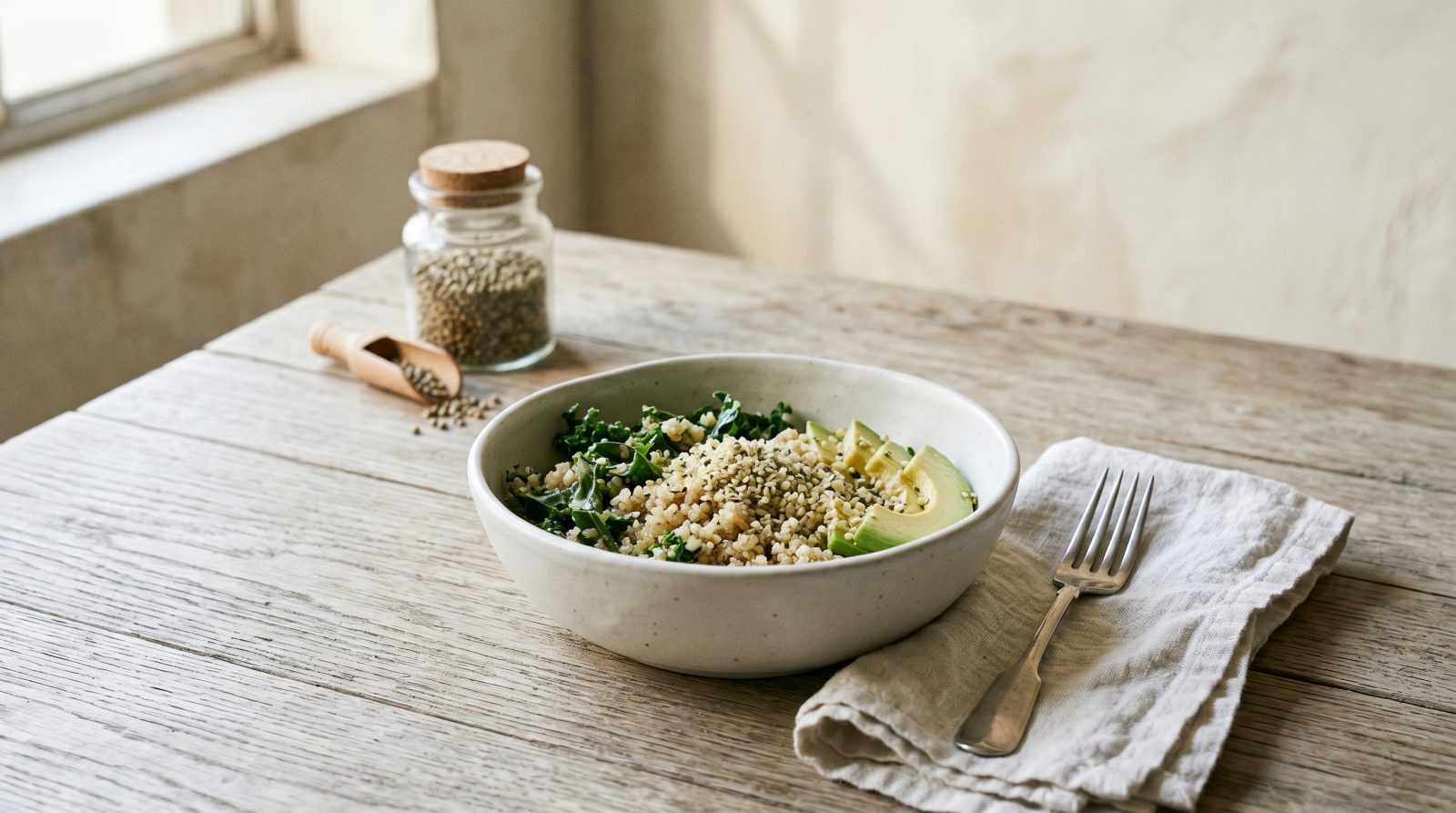
Hemp foods fit well into dietary patterns used in type 2 diabetes management and prevention. The combination of complete protein, healthy fats, low net carbohydrates, and substantial fibre (in some hemp forms) supports glycemic control. Hemp does not treat diabetes; it is a useful ingredient within evidence-based dietary management.
Why hemp suits diabetes-aware eating
- Low net carbohydrate. Hemp hearts provide 1g net carb per 30g serving; minimal impact on blood glucose.
- High protein. Protein blunts post-meal glucose spikes. Hemp hearts deliver 10g per serving.
- Polyunsaturated fats. Replacing saturated fats with PUFAs may improve insulin sensitivity in some research.
- Magnesium. Magnesium status correlates with insulin sensitivity. Hemp provides 50% of daily magnesium per serving.
- Fibre. Whole hemp seed, hemp flour, and some hemp protein powders contribute meaningful fibre, which slows carbohydrate absorption.
Glycemic impact comparison
How hemp products affect blood glucose response in typical use:
| Food | Per 30g | Approximate glycemic impact |
|---|---|---|
| Hemp hearts | 1g net carb | Negligible |
| Hemp flour (in baked goods) | 3g net carb | Low |
| Hemp protein powder | 2g net carb | Negligible |
| White rice (cooked) | 30g net carb | High |
| White bread | 15g net carb | Moderate to high |
| Apple | 22g net carb | Moderate |
Hemp's role in glucose management
Three mechanisms by which hemp foods support glucose management:
1. Direct displacement of higher-carb foods
Substituting hemp hearts for higher-carb toppings (croutons, granola, sugary breakfast cereals) reduces total meal carbohydrate. Substituting hemp flour for some wheat flour in baked goods reduces glycemic impact of the finished product.
2. Protein-mediated glucose blunting
Adding protein to a meal blunts post-meal glucose response. Adding 2-3 tablespoons of hemp hearts to a higher-carb meal (oatmeal, smoothie, salad with grain) increases protein content meaningfully.
3. Fat-mediated absorption slowing
Healthy fats in hemp slow gastric emptying and carbohydrate absorption, producing flatter post-meal glucose curves.
Practical applications
- Breakfast. Oatmeal with hemp hearts (vs plain oatmeal): lower glycemic impact, higher satiety.
- Salads. Hemp seed oil dressing and hemp hearts topping replace mayonnaise-based dressings.
- Smoothies. Hemp protein powder and hemp hearts replace fruit-heavy compositions.
- Baking. 25% hemp flour substitution in muffins or quick breads.
- Snacks. Hemp-containing energy bites instead of fruit and grain bars.
What hemp does not do
- It does not treat diabetes. Diabetes requires medical management.
- It does not replace insulin or other prescribed medications.
- It does not lower already-elevated blood glucose acutely.
- It does not protect against complications without comprehensive disease management.
For people with diagnosed diabetes
If you have type 1 or type 2 diabetes:
- Hemp foods are generally compatible with diabetes-aware eating patterns.
- Monitor your individual glucose response when introducing hemp foods; responses vary.
- Discuss significant dietary changes with your diabetes care team (endocrinologist, registered dietitian, certified diabetes educator).
- Continue prescribed medications and self-monitoring as directed.
- Hemp foods are not on Canada's priority allergen list; allergic reactions are uncommon but possible.
Hemp and metformin or other diabetes medications
Hemp foods do not have documented significant interactions with standard diabetes medications (metformin, sulfonylureas, DPP-4 inhibitors, GLP-1 agonists, SGLT2 inhibitors, insulin). The hemp seed itself is treated as ordinary food in this regard. CBD products are a separate category and do have documented drug interactions; do not confuse hemp foods with CBD products.