
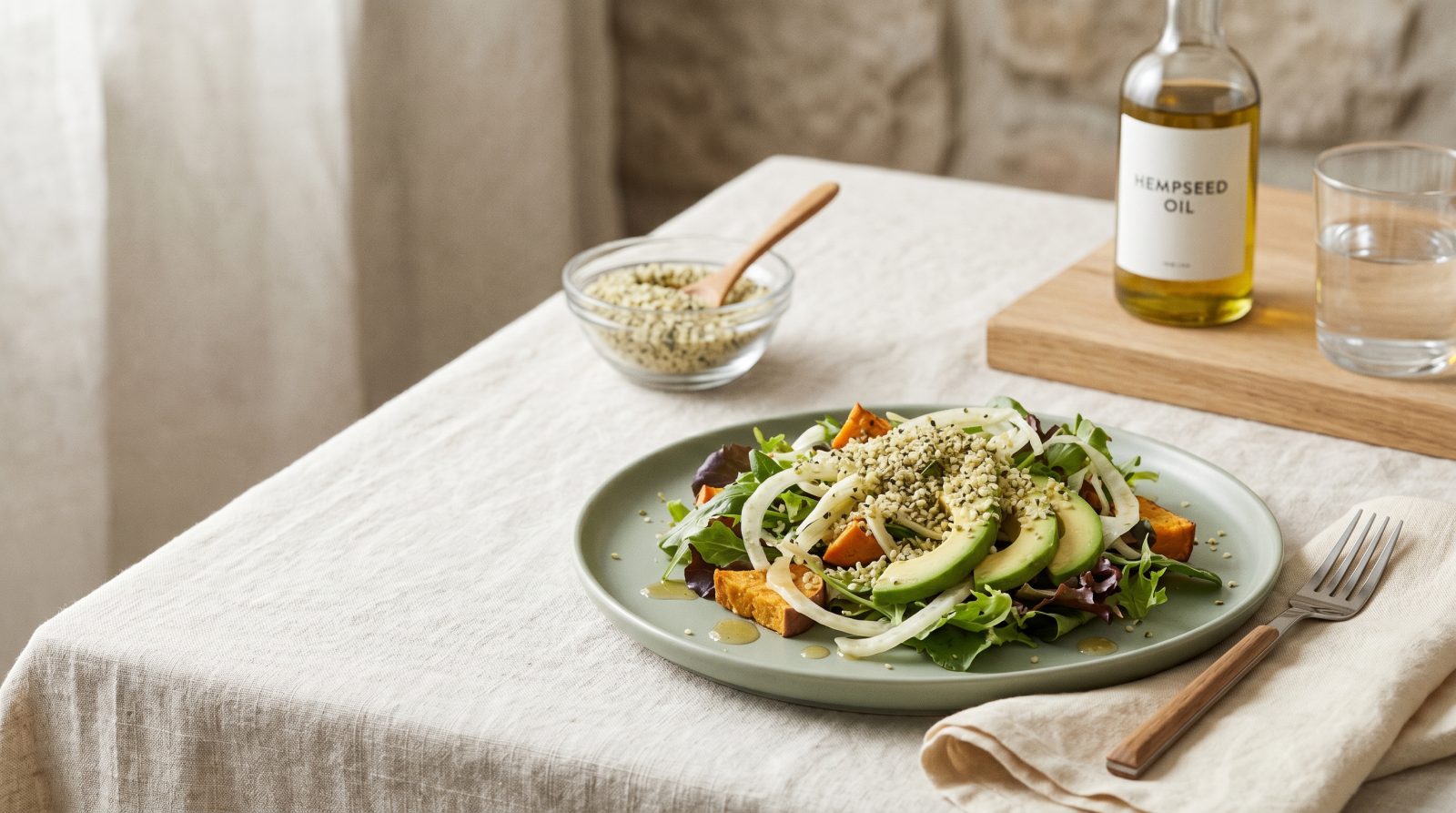
Hemp can support weight management when used thoughtfully. The high protein content increases satiety; the polyunsaturated fats are calorie-dense but nutritionally valuable; the lower net carb count fits low-carb dietary patterns. Hemp does not produce weight loss directly; it is a tool within a broader weight management strategy.
Hemp's relevant properties for weight management
- High protein density. Protein produces stronger satiety than carbohydrate or fat per calorie. Hemp hearts provide 10g protein in 166 calories.
- Low net carbohydrate. 1g net carb per 30g serving makes hemp compatible with low-carb and keto approaches.
- Magnesium. Magnesium status correlates with insulin sensitivity in epidemiological research.
- No added sugar. Hemp hearts and oil contain zero added sugar.
- Minimally processed. Hemp foods are simple unrefined products, easier to incorporate into whole-food-focused dietary patterns.
The calorie density caveat
Hemp is calorie-dense. Hemp hearts deliver 5.5 calories per gram; hemp seed oil delivers 9 calories per gram. Excessive portions add up quickly:
- 1/4 cup hemp hearts: ~220 calories
- 1/2 cup hemp hearts: ~440 calories
- Sprinkling hemp hearts on three meals daily (1 tablespoon each): ~165 calories
For weight management, measure or eye-portion deliberately rather than eating directly from the bag.
Strategies for using hemp in weight management
1. Hemp as a protein boost in lower-calorie meals
Add 2 tablespoons of hemp hearts to a vegetable-heavy salad or soup. The protein addition (6-7g) increases satiety while keeping the meal's total calories moderate (~200-350 depending on other ingredients).
2. Hemp protein powder for low-calorie protein
Hemp protein powder (with most fat removed) delivers 15-20g protein in ~100-110 calories. More efficient than hemp hearts when total calorie budget is tight.
3. Replacing higher-calorie toppings with hemp hearts
Hemp hearts can substitute for:
- Croutons (saves 30-50 calories per serving)
- Cheese sprinkle (saves 50-100 calories)
- Fried bacon bits (saves 80-150 calories)
- Granola topping (similar calories, but more protein and fewer carbs)
4. Hemp seed oil in dressings rather than mayonnaise
A tablespoon of hemp seed oil-based vinaigrette typically replaces 2-3 tablespoons of mayonnaise in a sandwich or salad, saving 100-200 calories while contributing better fats.
What hemp does not do for weight management
- It does not burn fat. No food burns fat. Weight loss requires sustained caloric deficit.
- It does not specifically target abdominal weight or other localised fat.
- It does not boost metabolism in any clinically meaningful way.
- It does not replace exercise. Sustainable weight management combines diet, exercise, and behavioural patterns.
Weight gain considerations
For consumers seeking to gain weight (athletes, recovery from illness, eating disorder recovery), hemp can be useful in the opposite direction. Higher-calorie hemp-rich preparations (energy bites, granolas, smoothies with multiple hemp sources) provide nutrient-dense calories that are easier to consume than carbohydrate-only options.
Working with a dietitian
For people with significant weight management goals (loss or gain), or with metabolic conditions like type 2 diabetes, working with a registered dietitian produces better outcomes than focusing on individual ingredients. Hemp foods integrate well into most evidence-based weight management approaches; a dietitian can fit hemp into your broader plan.