
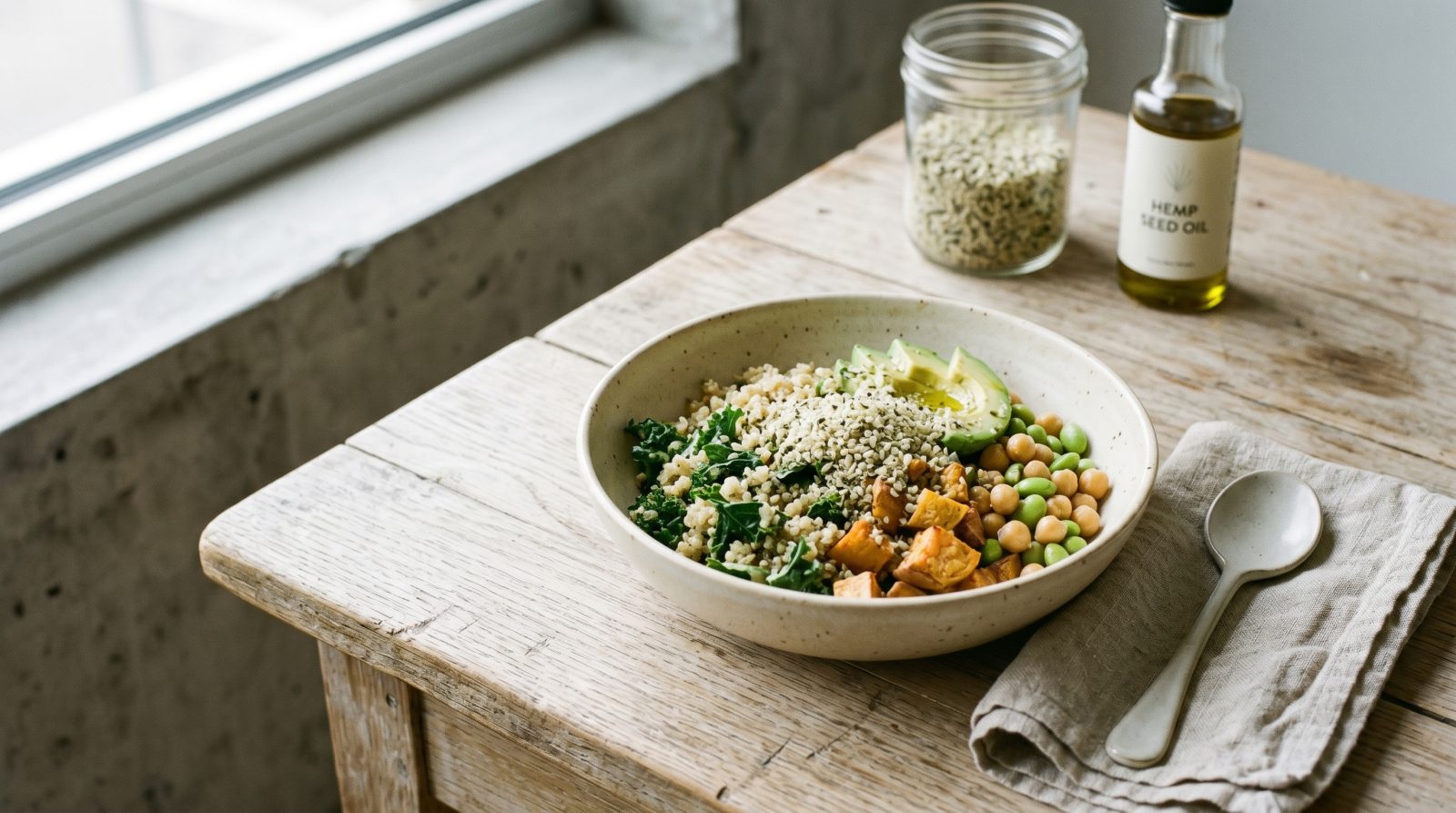
Hemp foods fit well into plant-based eating because they deliver complete protein, balanced polyunsaturated fats, and meaningful mineral density in a single ingredient. Its practical value is filling the exact gaps plant-based eating tends to leave: complete protein, omega-3 fats, iron, and zinc.
The plant-based protein challenge
Most plant proteins are incomplete: they lack adequate proportions of one or more essential amino acids. Lentils, beans, and grains each have a different limiting amino acid. Plant-based eaters traditionally combine multiple protein sources across the day to assemble a complete amino acid profile. Hemp is one of the few plant foods that delivers complete protein in a single ingredient, alongside quinoa, soybeans, buckwheat, and amaranth.
Hemp's contribution to plant-based nutrition
| Nutrient | Per 30 g hemp hearts | Why it matters in plant-based diets |
|---|---|---|
| Complete protein | 10 g | Reduces need to carefully combine protein sources |
| Iron | 2.4 mg | Plant-based diets often lower in absorbed iron |
| Zinc | 3 mg | Plant zinc has lower bioavailability than animal |
| Vitamin B6 | 0.18 mg | Important for amino acid metabolism |
| Magnesium | 210 mg | 50% daily value |
| ALA omega-3 | 2.5 g | Plant-based diets typically lower in omega-3 |
| GLA | 0.4 g | Rare in plant foods |
Daily integration patterns
A practical pattern for a plant-based eater incorporating hemp daily:
- Breakfast: 2-3 tablespoons hemp hearts on oatmeal, in smoothies, or stirred into plant yogurt.
- Lunch: Hemp hearts on a grain bowl or salad; hemp seed oil in dressing.
- Snack: Hemp-containing energy balls or sprinkled on nut butter toast.
- Dinner: Hemp protein blended into sauces or hemp hearts on finished dishes.
This routine delivers approximately 20 to 25 grams of complete protein and 50 percent of daily magnesium from hemp alone, while remaining within typical caloric budgets.
Hemp protein versus other plant proteins
| Protein | Per 30 g | Complete? | PDCAAS |
|---|---|---|---|
| Hemp protein powder | 15-20 g | Yes | 0.49-0.61 |
| Pea protein isolate | 22-24 g | Nearly (low methionine) | 0.69-0.89 |
| Brown rice protein | 22-24 g | No (low lysine) | 0.42-0.50 |
| Soy protein isolate | 22-25 g | Yes | 1.0 (capped) |
| Pumpkin seed protein | 15-18 g | Nearly | 0.55-0.70 |
Hemp protein blended with pea protein produces a more complete amino acid profile than either alone. Many premium plant protein products use this hemp-pea blend.
For vegan athletes
Hemp is particularly valuable for vegan athletes because it provides complete protein and is allergen-friendly. A vegan athlete consuming 60 grams of hemp seed across the day in oats, smoothies, and salads adds 20 grams of complete protein without resorting to processed isolates.
For new plant-based eaters
For someone transitioning to plant-based eating, hemp hearts are a low-friction starting point. They require no preparation, blend into existing foods without changing recipes, and provide visible nutritional reassurance during the transition. The mild flavour does not require adapting taste preferences.