
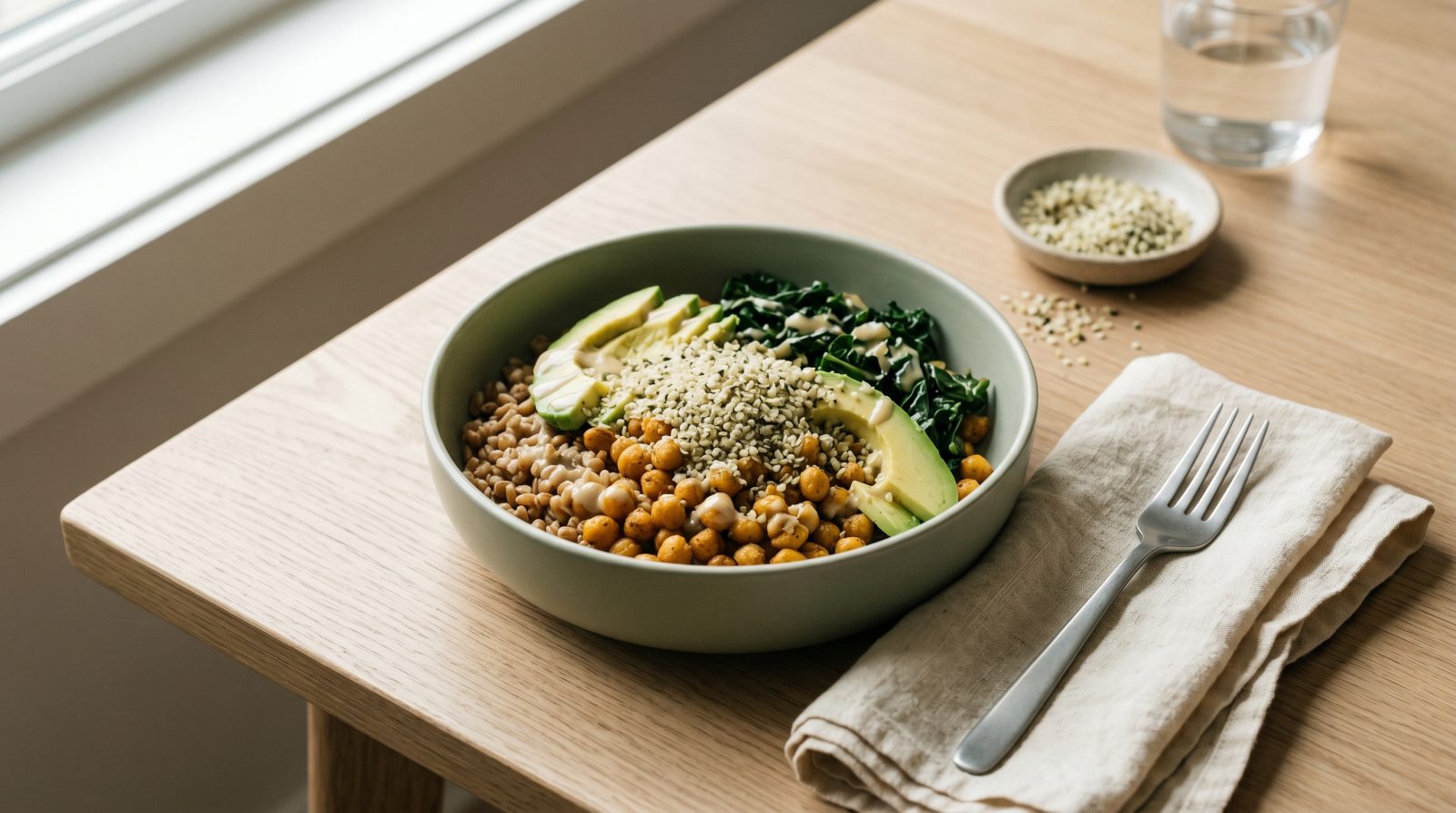
Hemp is one of the more efficient ingredients for hitting daily protein targets, particularly within plant-forward or omnivorous diets seeking to reduce meat dependence. The combination of complete protein, palatable flavour, and convenient form makes it practical to add 10 to 20 grams of protein daily through hemp alone.
Adult protein requirements
Standard nutritional guidance for adults:
- Minimum requirement: 0.8 grams of protein per kilogram body weight (RDA)
- Active adults: 1.2 to 1.6 g/kg
- Strength athletes: 1.6 to 2.2 g/kg
- Older adults (60+): 1.0 to 1.2 g/kg (to support muscle preservation)
For a 70 kg adult, this ranges from 56 grams (RDA minimum) to 154 grams (high-intensity strength training).
Hemp's protein contribution at various intake levels
| Daily hemp intake | Protein contribution | % of 100g daily target |
|---|---|---|
| 1 tablespoon hemp hearts (10g) | 3 g | 3% |
| 3 tablespoons hemp hearts (30g) | 10 g | 10% |
| 1 scoop hemp protein powder (30g) | 17 g | 17% |
| 30g hemp hearts + 1 scoop hemp protein | 27 g | 27% |
| 60g hemp hearts (heavy use) | 20 g | 20% |
Building a protein-rich day with hemp
A realistic daily pattern that hits 100 grams of protein with hemp as a meaningful contributor:
- Breakfast: Oatmeal with 3 tbsp hemp hearts (10g), Greek yogurt 200g (20g), berries. Total: 30g protein.
- Lunch: Grain bowl with quinoa, chickpeas (7g), grilled chicken or tofu (20g), vegetables, hemp seed oil dressing. Total: 27g protein.
- Snack: Hemp-protein smoothie (1 scoop hemp protein 17g, banana, milk 8g). Total: 25g.
- Dinner: Salmon or chickpea curry (25g protein), brown rice, vegetables, hemp pesto. Total: 28g protein.
Total: ~110 grams of protein, with 35 grams from hemp products.
When hemp protein matters more
Hemp protein is particularly valuable in:
- Plant-based diets where complete proteins from single ingredients reduce planning complexity.
- Mediterranean-style eating with reduced meat, where hemp adds protein density without adding meat.
- Older adults where chewing capacity may be reduced and soft, easy protein sources are valuable.
- Travel and convenience eating where pre-prepared protein powders or hemp-rich bars provide reliable protein without refrigeration.
- Pregnancy and breastfeeding where protein needs increase and clean ingredients are valued.
When hemp protein matters less
Hemp is not the most efficient protein source for:
- Maximum muscle protein synthesis stimulation, where whey isolate's higher leucine content gives an edge per gram.
- Strict calorie-controlled diets where hemp hearts' fat content adds calories that pure protein powder would not.
- Carnivore or ketogenic protein-focused diets where animal protein is preferred.
The hemp + pea blend approach
For consumers wanting plant protein with profile closer to dairy: hemp protein combined with pea protein. Hemp is rich in arginine and methionine; pea is rich in lysine and leucine. Together, the amino acid profile approaches whey. Many premium plant protein powders use this blend.