
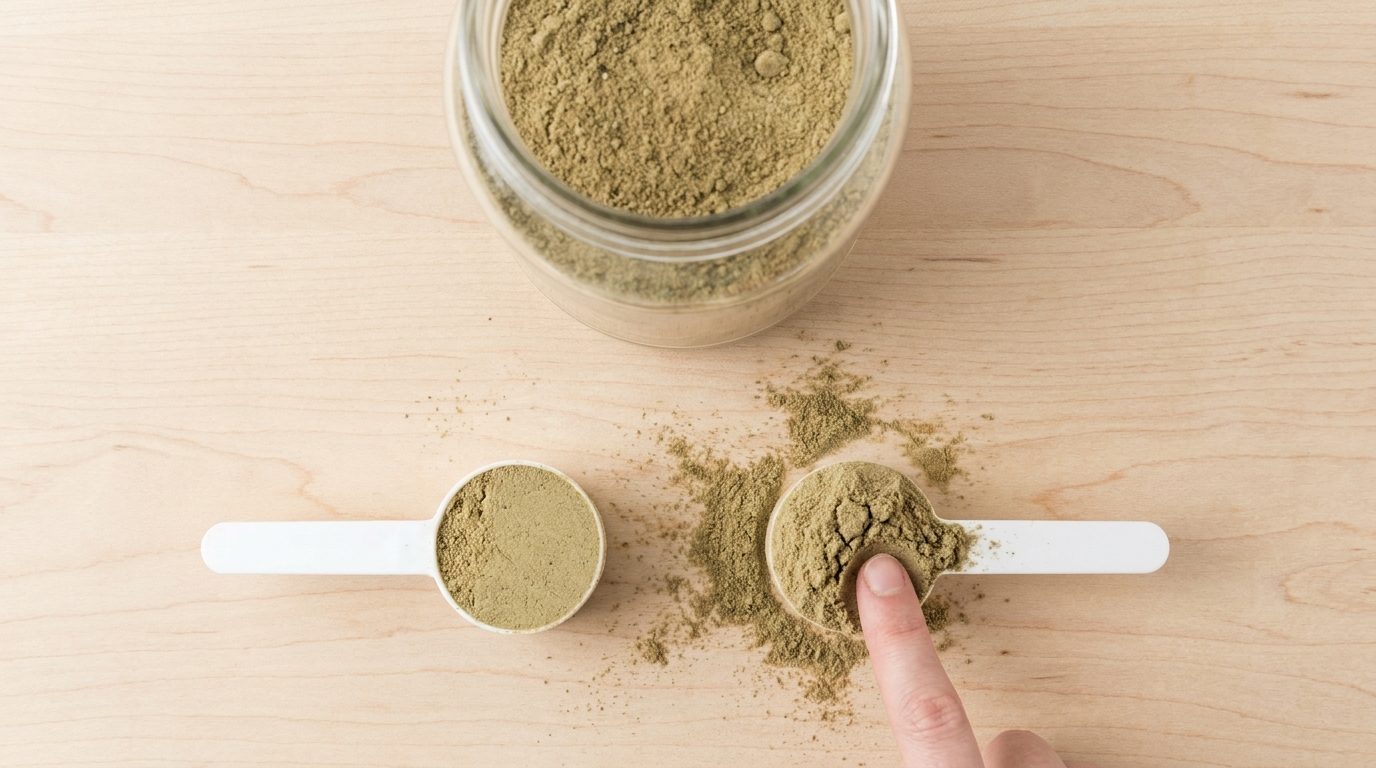
Nobody overdoses on a food protein. But there is a point where an extra scoop of hemp protein stops adding anything useful and starts costing you, and it arrives earlier than most people expect.
Is there a real upper limit?
Hemp protein powder is milled seed with much of the oil pressed out. It is food, not a pharmaceutical, and for a healthy adult there is no established toxic dose. The genuine constraints are ordinary ones: how much fibre your gut tolerates in a sitting, how many calories the powder brings, and what it is pushing off your plate.
The exception worth naming plainly is medical. If you have reduced kidney function, protein intake should be set by a clinician rather than by a scoop size, and that applies to every protein source, not just hemp.
Fibre is the ceiling that arrives first
Unlike whey or a pea isolate, hemp protein powder keeps a meaningful amount of the seed's fibre, often several grams per scoop. That is a feature at one or two scoops and a problem at four. Cramping, gas and general abdominal unhappiness are the usual outcome, and they are not a sign that hemp disagrees with you, only that you moved too fast.
Anyone who has been eating a low-fibre diet should treat hemp protein like any other fibre increase: start with half a scoop for several days, then a full one, and drink noticeably more water while doing it. Fibre without fluid is the most common cause of the discomfort people blame on the powder.
How much of your protein should come from a powder?
A reasonable rule is that supplements should top up a diet rather than constitute it. For most people that means one to two scoops a day, contributing somewhere between 12 and 30 grams of protein, with the remaining 60 to 90 per cent coming from whole foods.
Three scoops is defensible in a specific situation: a large person eating plant-based, training hard, struggling to reach a target in the region of 1.6 grams per kilogram of body weight. Four or more is nearly always a sign that something else is wrong with the diet, usually that meals are too small and the powder is being asked to rescue them.
What actually goes wrong when you push past it
- Digestive load. The fibre stacks up faster than the protein does, and the gut complains before the muscles benefit.
- Displacement. Every scoop replaces food that would have carried vitamins, minerals and variety. Powder is nutritionally narrow by design.
- Diminishing returns. Beyond roughly 1.6 to 2.0 grams per kilogram of body weight, additional protein has little further effect on muscle. Extra scoops become expensive calories.
- Calories you did not count. Hemp protein is not fat-free. Blended with banana, nut butter and full-fat milk, a large shake can quietly become a meal-sized calorie load.
A sane structure for one or two scoops
Spread rather than stack. Protein is used more efficiently when it arrives in several moderate doses than in one enormous one, so a scoop in a morning smoothie and a scoop in the afternoon beats two scoops after training.
Pair rather than isolate. Hemp is relatively low in lysine, so a shake made with oats, or a scoop stirred into a lentil soup, produces a better overall amino acid mix than powder in water. Use the powder where its texture is hidden: smoothies, porridge, pancake batter, muffins and thick soups all absorb it. Water and a shaker bottle expose it, which is why people who drink it that way tend to quit within a month.
If you want a single number to work from, put the powder ceiling at two scoops on ordinary days and treat a third as an occasional response to a genuinely heavy training day. Then check the rest of the diet: three whole-food meals containing 25 to 30 grams of protein each already cover most adults' needs, and if those meals are in place, one scoop is usually all the powder that is warranted. If they are not in place, fixing the meals will do far more for you than another scoop ever will. For the wider picture on protein targets and food sources, see the article library.